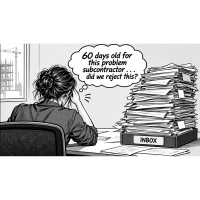
By Tom Dunn, Pierce Atwood LLP
About the Author: Tom Dunn is a construction lawyer with over 20 years’ experience helping contractors prove-up, confront, mitigate, and resolve construction project payment, change order, and related claims and disputes in Massachusetts and Rhode Island. He leads the Construction Practice Group at Pierce Atwood LLP, a law firm with offices in Boston, Providence, Portsmouth, and Portland. As a long-standing member of the AGC of Massachusetts, he serves as Chair of the AGC MA’s Communications Advisory Committee and as a member of the Programs Advisory Committee. Tom can be contacted at rtdunn@PierceAtwood.com.
What is the Massachusetts Prompt Pay Act
The Massachusetts Prompt Pay Act (G.L. c. 149, §§ 29E and 29F) (the “Act”) is a statute enacted in 2010 to address a long-standing problem in the construction industry: slow payment from upstream contracting parties to lower tiers. The Act applies to private commercial construction projects where the contract with the project owner has an original contract price of $3 million or more. It does not apply to residential projects with one to four dwelling units.In plain terms, as relevant for this article which focuses on payment applications and change order requests, the Act sets outside deadlines for submitting, approving or rejecting, and paying payment applications and change order requests.
Deemed Acceptance. One of the Act’s most powerful features is its “deemed approval” mechanism. If a party fails to approve or reject a payment application or change order request within the statutory timeframe, the application or request is automatically “deemed approved.” This happens by operation of law — no court order is needed, no motion must be filed. The clock simply runs, and if no compliant written response is delivered, the application is treated as approved. This is not a technicality. Courts have enforced deemed approval even where the rejecting party had legitimate substantive grounds for rejection — because the rejection did not comply with the Act’s procedural requirements (including the requirement that a rejection be “certified as made in good faith”).
The “Pay-First” Rule. In June 2024, the Massachusetts Supreme Judicial Court issued its landmark decision in Business Interiors Floor Covering Business Trust v. Graycor Construction Co., 494 Mass. 216 (2024) (“Graycor”). The Court held that when a payment application becomes deemed approved because the paying party failed to respond in time, that party must pay the invoiced amount before it can assert any defenses or counterclaims in a later proceeding. This is known as the “pay-first rule.” The Court reasoned that if a party could ignore the statutory deadlines, never pay, and then litigate the dispute as if nothing had happened, the deemed-approval provision would be meaningless.
In June 2026, the SJC decided J.C. Cannistraro, LLC v. Columbia Construction Co. (SJC-13819), which involved a dispute in arbitration. In Cannistraro, the arbitrator allowed the general contractor to assert a recoupment counterclaim (a claim to offset against the subcontractor’s recovery) even after the invoices had been deemed approved due to the GC’s failure to include the required good-faith certification. The SJC declined to vacate the arbitrator’s award based on the narrow standard of judicial review that applies to arbitration awards. This procedural distinction matters such, in ordinary litigation before a Superior Court judge, a contractor is prudent to presume that the pay-first rule remains fully in effect.
The Prompt Pay Act creates real consequences for missing deadlines and recent court decisions have added teeth to those consequences. The five steps below are designed to help Massachusetts contractor project management and accounting teams build specific compliance protocols into their everyday workflow.
Step 1: Conform Your Contracts and Project Form Documents to Match the Prompt Pay Act
The single most important thing a contractor can do is align its contract language and internal processes with the Act’s deadlines before a project begins. Compliance starts with the contract and not with a reactive scramble after a payment application lands on someone’s desk.Know Your Deadlines and Build in a Buffer. Under the Act, the time to approve or reject a payment application depends on where you sit in the contract chain. The baseline period is 15 days from receipt of the application. But the Act adds 7 additional days for each tier of contract below the project owner.
Here is what that means in practice:
- Owner responding to the GC’s payment application: 15 days.
- GC responding to a first-tier subcontractor’s application: 22 days (15 + 7).
- GC (or first-tier sub) responding to a second-tier subcontractor’s application: 29 days (15 + 7 + 7).
- Each additional tier below adds another 7 days.
These are the maximum periods allowed by statute. Your internal contract deadlines should be shorter. Try moving them up by at least 2 days to create a buffer. That 2-day cushion accounts for vacations, sick days, weekends, delays in internal routing, and the reality that compliance requires someone to actually review and act on the application, not just receive it. For example, if your contract is with a first-tier subcontractor, your internal deadline for response to payment applications may be 20 days, not 22.
The same tiered structure applies to change order requests. A change order request is any request for an increase in the contract price — or for additional time — submitted by a subcontractor. It triggers the same approval/rejection clock but starting with a 30-day period.
Draft Standard Response Form for Pay Apps and Change Orders. Every project team should have a pre-drafted standard form for responding to payment applications and change order requests.
The form should have three options for a response:
- Option 1: Approval. A straightforward approval of the full amount or change order request. Provide the date for the anticipated payment date in compliance with the Act.
- Option 2: Approve in Part / Reject in Part. Here, the upper-tier contractor approves a portion and rejects the remainder of the payment application or change order request. It must include a mandatory field for the factual and contractual basis for the partial rejection. The Act requires that any rejection “include an explanation of the factual and contractual basis for the rejection” and “be certified as made in good faith.” Place the good-faith certification language immediately below the factual-basis field on the pre-printed on the form so that the person signing the form should see both together, so there is no ambiguity about what they are certifying. Provide the date for the anticipated payment date in compliance with the Act.
- Option 3: Full Rejection. This form rejects the entire application or change order request. Like Option 2, it must include a mandatory factual-basis field and the pre-pritned good-faith certification language directly adjacent to it.
The good-faith certification is not optional. Courts have held that a rejection lacking this certification is not a valid rejection under the Act which means the application becomes deemed approved even if the rejecting party had legitimate substantive reasons for rejection. Build the certification into the form itself so it cannot be overlooked.
Step 2: Pay Undisputed Amounts
The underlying purpose of the Prompt Pay Act is to ensure that payment flows down the project chain to the contractors and subcontractors who furnish labor and materials. The Massachusetts Legislature enacted the Act in 2010 — titled “An Act Promoting Fairness in Private Construction Contracts” — because slow payment had become the single most important business issue facing subcontractors in the Commonwealth.Honoring that purpose in practice means paying undisputed amounts promptly even when there are disputes about other portions of a payment application. The equities are unlikely to fall against a party that pays what is undeniably owed. Prompt payment of undisputed amounts demonstrates good faith, preserves the working relationship, and keeps the project moving.
Step 3: If You Miss a Deadline, Follow the Pay-First Rule
Despite best efforts, deadlines are sometimes missed. A project manager goes on vacation. An email gets buried. An internal routing process stalls over a holiday weekend. When that happens — when a payment application or change order request becomes deemed approved because you failed to respond within the statutory timeframe — there is a specific protocol you must follow.The Graycor Pay-First Rule. In Graycor, the SJC held that once an invoice is deemed approved, the paying party must issue payment before — or at the same time as — asserting any defenses or counterclaims. The Court’s exact language was that payment must be made “prior to, or contemporaneous with, the invocation of any common-law defenses in any subsequent proceeding regarding enforcement of the invoices.” If you do not pay first, you cannot raise defenses at all.
This is not a suggestion or a best practice recommended by lawyers. It is a court-imposed rule. The SJC reasoned that if a party could blow past the deadline, never pay, and then raise defenses in court as if the deemed-approval provision did not exist, the Act’s approval mechanism would “render this approval to be of no import.” The pay-first rule gives the deemed-approval provision its teeth.
The Consequence of Failing to Pay First. If you assert defenses before paying, those defenses are foreclosed. They are not merely weakened or subject to an adverse inference — they are eliminated. In Graycor itself, the general contractor had a common-law impossibility defense (the project owner had stopped paying due to COVID-related financial distress). That defense might have had merit. But because Graycor never paid the deemed-approved invoices before raising the defense, the SJC held it could not raise the defense at all. Summary judgment for the subcontractor was affirmed.
What About Cannistraro? Some in the industry have asked whether the SJC’s 2026 decision in Cannistraro softened the pay-first rule. The short answer is not to rely on such a change. In Cannistraro, the dispute went to arbitration under the AAA Construction Industry Arbitration Rules. The arbitrator allowed the general contractor to assert a recoupment counterclaim even though the GC had not strictly complied with the pay-first sequence, reasoning that the subcontractor had received timely notice of the factual grounds for rejection (even though the good-faith certification was missing). The SJC declined to vacate that award because the standard of judicial review for arbitration awards is extremely narrow. Courts will confirm an arbitration award “even where it is wrong on the facts or the law, and whether it is wise or foolish, clear or ambiguous.”
There is no guarantee that a Superior Court judge would reach the same result in ordinary litigation. The Cannistraro decision procedural posture focusses on deference to arbitrators, not about changing the substantive rule from Graycor. Best practice remains that if you miss a deadline and the invoice is deemed approved, pay first. Then assert your legitimate defenses and counterclaims. The pay-first rule is a sequence requirement, not a prohibition on raising defenses. It just means you must pay before you litigate.
Step 4: Define Payment Applications and Change Order Requests in the Contract
One effective compliance tools is to define precisely what constitutes a valid payment application or change order request under the contract. The Act creates consequences for failing to respond to these submissions — but it does not prescribe exactly how they must be submitted. That gap is your opportunity to create clarity.Include Mandatory Submission Procedures in Subcontracts. Your subcontracts should specify the exact steps a subcontractor must follow to submit a valid payment application or change order request. This is not about creating barriers to payment — it is about ensuring that both parties know when the statutory clock starts. Without clear procedures, disputes inevitably arise over whether a particular email, phone call, or informal markup constituted a “payment application” that triggered the Act’s deadlines.
Such a submission procedure could specify:
- The format of the application (e.g., the specific form, the required supporting documentation, the level of detail for schedule of values breakdowns).
- The method of submission (e.g., through Procore, via email to a designated address, or by physical delivery to a specified office).
- The person or role authorized to receive the submission on behalf of the GC.
- Any required certifications or sworn statements that must accompany the application.
If You Use Project Management Software, Be Specific. Many projects use platforms like Procore, Textura, or similar software for payment processing. If your project uses such a platform, your subcontract should specify the exact steps that must be taken within that platform to constitute a valid payment application and a valid change order request under the Act. For example: “A payment application is submitted when the subcontractor completes the following steps in Procore: [list specific steps]. A submission is not complete, and the Parties agree that the Prompt Payment Act statutory period does not begin to run, until all required fields are populated and the application is marked as ‘submitted’ within the system.”
Consider a Designated Subject-Line and Email Requirement. One practical approach gaining traction is to include a contractual requirement that any email submitting a payment application include the phrase “REQUEST FOR PAYMENT — PROMPT PAY ACT” in the subject line. Similarly, any change order request should include “REQUEST FOR CHANGE ORDER — PROMPT PAY ACT” in the subject line. The email must be sent to a designated email address (e.g., a project-specific payment inbox), with a contractual provision that failure to use this language and address means the communication will not be treated as a qualifying payment application or change order request under the contract.
Will a court ultimately enforce these requirement in every circumstance? Perhaps not as a court might find that a subcontractor substantially complied even without the magic words. After all, the statute does not contain those requirements. But the contractual requirement serves two important purposes. First, it demonstrates the GC’s affirmative intent to comply with the Act by creating a system designed to ensure that payment requests are promptly identified and processed. Second, in a later dispute over whether a particular communication triggered the Act’s deadlines, the existence of a clear contractual procedure — and a subcontractor’s failure to follow it — may be persuasive evidence that the statutory clock was not triggered.
The goal is not to defeat legitimate payment claims through procedural traps. The goal is to create a system that works — one where both parties know exactly when a payment application or change order request has been submitted, and both parties can rely on that clarity.
Step 5: Consider Arbitration
The Cannistraro decision raises an important question for general contractors and subcontractors drafting dispute resolution clauses: should you include an arbitration provision in your subcontracts?The Favorable Standard of Review. Under Massachusetts law, courts must confirm an arbitration award unless a party establishes one of a handful of narrow statutory grounds for vacatur (that is, for setting the award aside). An arbitrator’s award will be upheld “even where it is wrong on the facts or the law, and whether it is wise or foolish, clear or ambiguous.” The court does not re-decide the case. It asks only whether the arbitrator exceeded the authority granted by the parties’ agreement? Did the arbitrator grant relief “prohibited by law”? These are difficult standards to meet.
In Cannistraro, the SJC held that the arbitrator’s recoupment award was not vacatur-worthy even though the arbitrator’s reasoning arguably departed from the Graycor pay-first rule. The SJC explained an error of law alone does not mean the arbitrator exceeded authority. This means an experienced construction arbitrator has substantial latitude to resolve disputes on their merits, guided by the statutory language and purpose of the Prompt Pay Act, without being strictly bound by every procedural prerequisite that a court in litigation may possibly enforce.
The Flip Side of the Deferential Standard. The same limited judicial review that benefits a party when the arbitrator rules in its favor can work against a party when the arbitrator makes an error of law. Massachusetts courts generally cannot vacate an arbitration award merely because it reflects an error of law — only where the award is “prohibited by law” or violates public policy in a narrow, exceptional sense. If an arbitrator misapplies the Prompt Pay Act, misreads Graycor, or ignores a statutory deadline requirement, the losing party may have little or no appellate recourse. For construction companies with tight margins and busy schedules, the speed and finality associated with arbitration before an experienced construction lawyer or construction industry professional will often outweigh this risk. I serve as an arbitrator with the American Arbitration Association and can vouch for the qualification, education, and training (including continuing annual training) the AAA requires of its arbitrator panel members. If litigation is your company default, take another fresh look at arbitration.
Conclusion
The Massachusetts Prompt Pay Act is not going away, and the courts continue to define and enforce its requirements with increasing specificity. The deemed-approval mechanism is real. The pay-first rule from Graycor is real. The consequences of noncompliance, including the forfeiture of defenses, are real.Yet, compliance is achievable. It requires intentional systems: contracts that match the statute, forms that satisfy statutory requirements, a culture of paying undisputed amounts promptly, and dispute resolution clauses that reflect a deliberate risk assessment, speed, and finality. The five steps above are not a guarantee against every dispute, but they are a foundation for managing risk in a legal landscape that demands active, disciplined attention to process.
Construction executives, project managers, and project accounting teams are the front line of Prompt Pay Act compliance. The decisions made in the field — what is a payment application or change order, how quickly a payment application is routed for review, whether a rejection form includes the required factual grounds and certification, whether an undisputed amount is paid while a disputed portion is resolved — are what determine whether the Act’s deadlines are met or missed. These five steps are designed to help your teams get it right and do it on time.
* * *
Disclaimer: This article is provided for informational purposes only and does not constitute legal advice. Readers should consult with qualified legal counsel regarding their specific circumstances and obligations under the Massachusetts Prompt Pay Act.