Best Preactice Provided by: Jimmy Layman, ASP - Pointman Safety Consulting
Every day on a construction site brings a new set of challenges. Work areas change, other trades move in and out, equipment is relocated, weather conditions shift, and the scope of work progresses. Yet too often, workers are sent into the field without having a meaningful conversation about what they are doing that day and the hazards they may encounter.
It is easy to become complacent, especially when performing the same type of work day after day. Workers can find themselves going on autopilot—showing up, going through the motions, and starting a familiar task without stopping to think about what may be different that day. A pre-shift safety meeting breaks that routine. It forces workers to stop and think about the task at hand, the conditions around them, and the hazards they may face before work begins.
Not every hazard is obvious, and we cannot expect workers to recognize every risk as soon as they arrive on site. However, if we take 10–15 minutes before the start of the day to slow down, think through the task, and talk about what could go wrong, there is a much better chance that a hazard will be identified and an incident prevented.
It is also important to understand how the JHA, PTP, and pre-shift safety meeting work together. The Job Hazard Analysis (JHA) is the overall plan that identifies the general steps, hazards, and controls associated with a task. The Pre-Task Plan (PTP) takes that information and applies it to the specific task and conditions the crew is facing that day. The pre-shift safety meeting is where that plan is communicated and discussed with the crew before work begins.
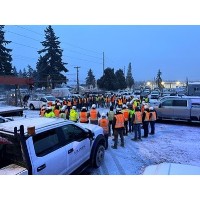
Whether you call it a crew huddle, tailgate talk, or a pre-shift safety meeting, the purpose is the same: to get the crew thinking and talking about the task ahead before the shift begins. An effective meeting should focus on four areas: Conditions, Task, Hazards, and Controls. What has changed? What are we doing today? What can hurt us? What are we going to do about it? When identifying hazards, crews should also consider the different sources of energy they may encounter throughout the task. Thinking about these energy sources can help identify hazards that may otherwise be overlooked.
The success of that meeting depends heavily on the person leading it—typically the crew leader. A good pre-shift safety meeting should not be someone reading a PTP word for word while the crew stands around waiting to get to work. The crew leader needs to understand the plan, know the task taking place that day, and get the crew involved in the conversation. Asking questions, listening to workers, and encouraging participation can be the difference between simply completing a required meeting and actually identifying a hazard before someone gets hurt.
This is also one of the most important opportunities for workers to have a voice. The employees performing the task are often the people closest to the hazards and may see something the crew leader does not. When a concern is raised, the crew leader can determine whether it can be addressed by the crew or whether it needs to be brought to the general contractor or project team for resolution.
Ultimately, the value of a pre-shift safety meeting is not the completed form or the signatures at the bottom of the page. It is the conversation that happens before work begins. Taking 10 minutes to think about the task, communicate the plan, listen to the crew, and address hazards can make the difference between a normal day on the job and an incident that could have been prevented.